Writing about AI in a pre-ChatGPT era
Company
Millionroads
Industry
Edtech Saas
Company description
Millionroads is a SaaS platform that collects and analyses data on study and career paths into a suite of tools for universities and unemployment agencies to better understand and respond to trends in the labor market.
Capabilities
CONTEXT
As the Content Manager, I wrote regularly for Millionroads: company news, industry opinions, product updates. This case study is about one article series that stood out.
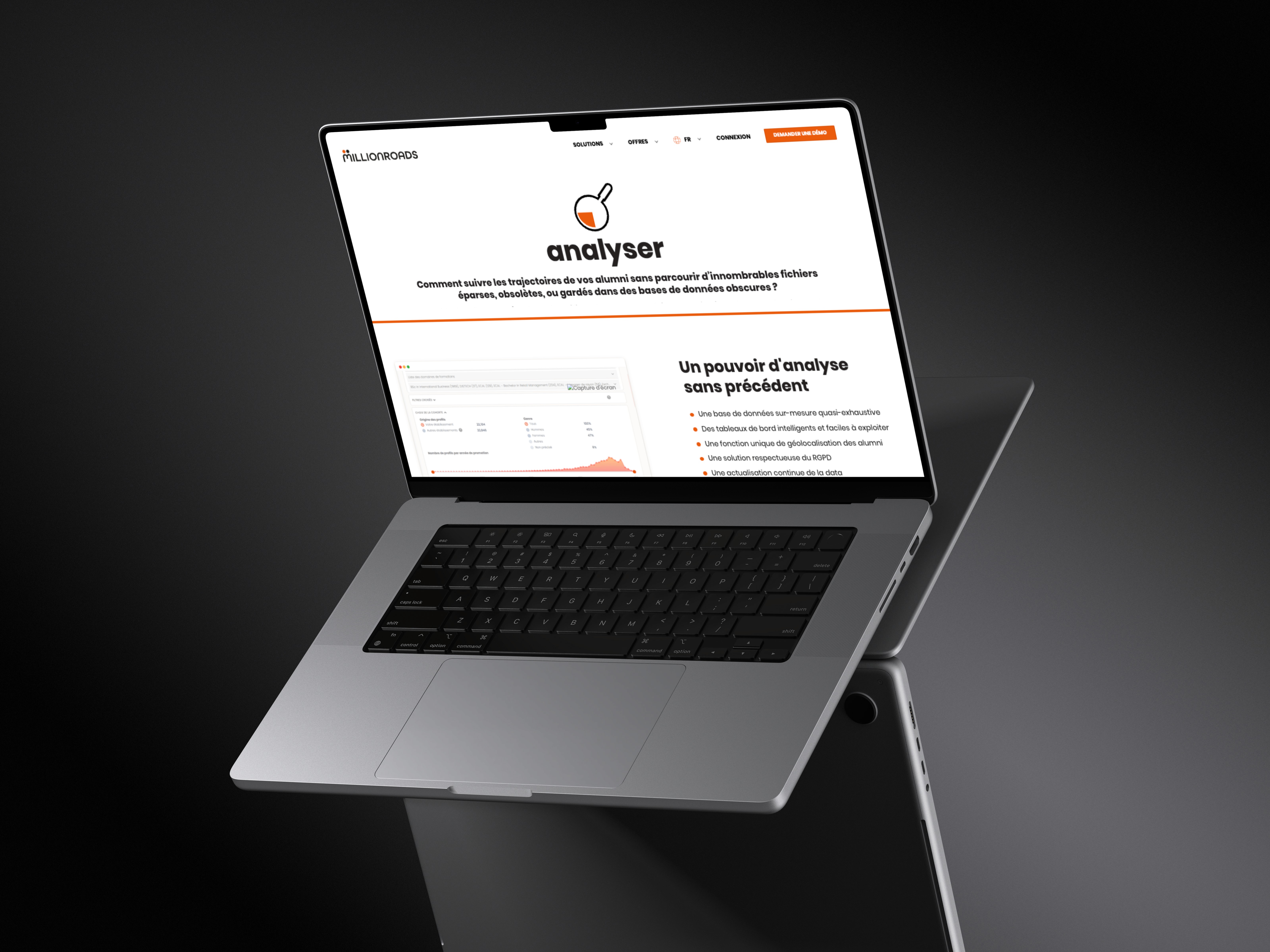
At the time, Millionroads was migrating from fragmented job classification systems to ESCO, a European taxonomy that unified occupations, skills, and qualifications. This shift fundamentally changed how our flagship product, Analyser, linked graduate outcomes to labor market demand.
Our target audience was French regional unemployment agencies and universities. They didn't need to know the depth and breath of our backend. They needed to understand why their current tools were giving them incomplete answers about the career paths they enabled.
WHAT I DID
I wrote a three-part editorial series that questioned the foundation everyone else was building on.
I shadowed our product and data teams to understand the taxonomy at a structural level, then translated that into a story about why legacy systems create blind spots.
Part one exposed how localised classification frameworks couldn't talk to each other. Part two showed how stitching them together made the problem worse. Part three introduced ESCO as a cross-domain framework where jobs and skills aren't siloed, and explained how machine learning added rigor to the process.
We were solving actual Big Data problems in a sector that didn't have the vocabulary for it yet. I had to explain algorithmic work to an audience that didn't have ChatGPT as a reference point. Every word had to researched and written from scratch.
OUTCOME
The series became the most-read content on the company blog for three consecutive months. It was repurposed across newsletters, LinkedIn, and sales decks as a tool that helped us build a shared language with new leads.
I also came out of it fluent in ETL processes, data pipelines, and how machine learning gets applied to messy real-world problems. This series became the foundation for how I approached every technical content after.