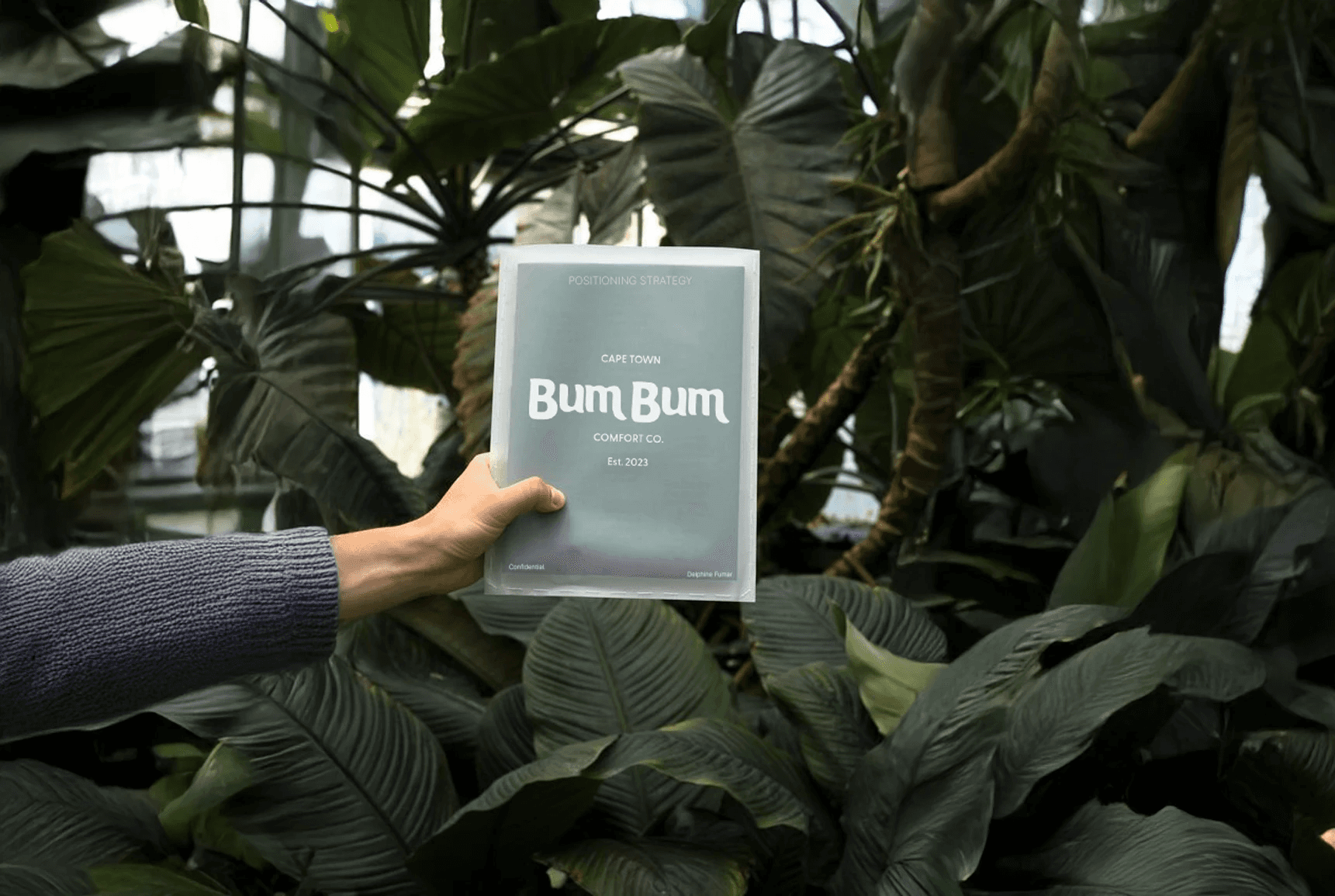
Building the right product for the wrong buyer
Company
BumBum
Industry
Outdoor gear, E-commerce
Company description
BumBum is a South African outdoor gear brand. They design durable, weather-resistant seating made specifically for real outdoor use, with a flagship outdoor pillow offering a lightweight, portable alternative to improvised or disposable seating.
Capabilities
CONTEXT
Bum Bum had built something people wanted: large, portable, waterproof pillows for outdoor use. The product worked. Early customers were happy. But the founders weren't sure who to talk to next.
They believed their core buyer was the "hardcore outdoor lover", someone who camps, hikes, and prioritises gear quality. That made intuitive sense. But the data was thin, and what little they had didn't quite fit the story.
With no direct competitors and only four months in market, they were making decisions in the dark. Before scaling marketing or sales, they needed to answer three questions: Who actually needs this? Why would they choose it? And what makes them buy?
WHAT I DID
I facilitated a series of three workshops. Each had a specific job to do. The goal was to develop a positioning strategy that made sense, felt right, and the founders could use right away.
Workshop 1: Understanding the industry
We started by stepping back. What industry are we actually in? What problem does this product solve? The goal was to define the playing field before trying to compete on it.
We asked:
What's the core function of this product?
What are the main customer behaviours in this space?
How does seasonality impact the business?
Where does South Africa's market differ from others?
Are there gaps we can fill?
This gave us a shared language and forced us to see the product in context, not in isolation.
Workshop 2: Defining the right customers
Next, we explored who actually buys and why. We worked at two levels: broad market segments, then individual buyer profiles within each.
We drilled down on pain points and buying behaviour:
What's stopping them from purchasing?
What frustrates them about current options?
What's the trigger that makes them buy?
The goal wasn't personas for the sake of it. It was to understand who has the problem badly enough to pay for a solution.
Workshop 3: Positioning against competitors
Finally, we used Porter's Five Forces to analyse the competitive landscape:
Who are the biggest direct and indirect competitors?
How much bargaining power do buyers and suppliers have?
What are the barriers to entry into the industry and target market?
What happens when the summer outdoor season is over?
What type of market leadership do we want?
We then mapped substitutes on a grid—functionality vs aesthetics, premium vs low-cost pricing—to see where Bum Bum actually sat and what made it different.
Beyond being clever with complex frameworks, we wanted to see the market clearly enough to make a choice in the future direction.
OUTCOME
There are no revenue numbers to share here. The brand was too early for that, and I wasn't running execution.
What changed was clarity. The founders stopped chasing a narrative that felt right but didn't quite fit. They gained confidence in who to speak to, what to say, and why it would land. They had a positioning strategy they could act on, one that made sense of the market as it actually was, not as they'd imagined it.